FOR IMMEDIATE RELEASE
PRESS STATEMENT BY ROLENE MARKS, NATIONAL SPOKESPERSON, SOUTH AFRICAN ZIONIST FEDERATION (SAZF)
15 January 2026
SAZF Commends Minister McKenzie for Halting Qatari Influence Operation at South Africa’s Venice Biennale Pavilion
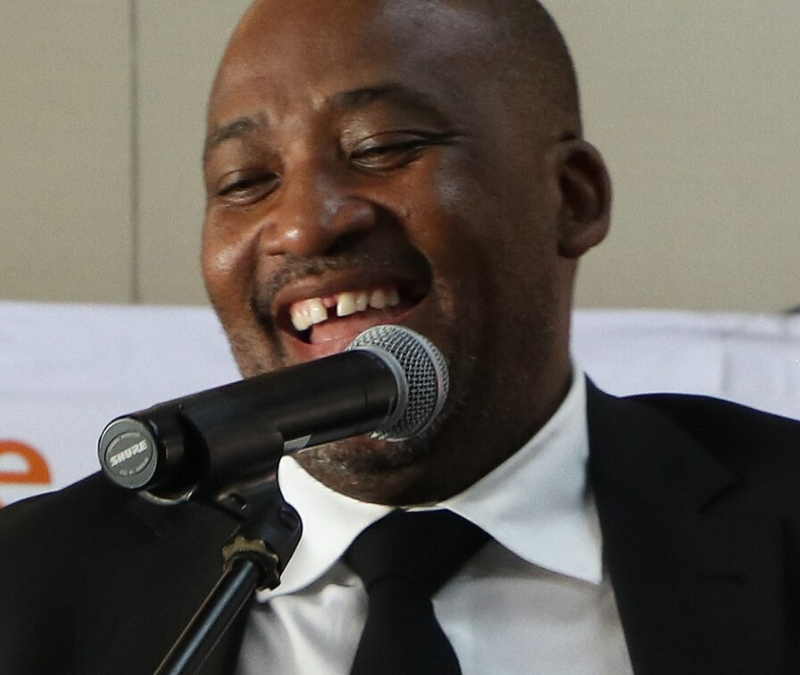
Johannesburg, South Africa – The South African Zionist Federation (SAZF) commends Gayton McKenzie, Minister of Sport, Arts and Culture, for his decisive and principled decision to cancel the agreement with Art Periodic for South Africa’s 2026 Venice Biennale pavilion. His intervention safeguarded South Africa’s cultural sovereignty against an attempt by a foreign state to use a taxpayer-funded national platform as a proxy for its geopolitical agenda.
While Minister McKenzie did not publicly name the foreign state in his official statements, multiple credible international reports have since identified Qatar as the country involved. Reporting by ARTnews, The Jerusalem Post, and Ynet has linked Qatar to arrangements to purchase artworks exhibited in South Africa’s pavilion after the Biennale. According to ARTnews, this information was provided by South African officials.
The purpose and effect of this arrangement were clear. Qatar would have been able to exert influence over the content of South Africa’s national pavilion without appearing as an official funder, sponsor, or exhibitor, and without renting its own pavilion to advance its views openly. Instead, it would have operated indirectly, using South Africa’s national platform to project political messaging hostile to Israel.
This arrangement reportedly incentivised the inclusion of highly politicised material, including allegations of “genocide” in Gaza, the reframing of South African and Namibian historical experiences through the Israel-Hamas conflict, and tributes aligned with explicitly anti-Israel narratives. Such messaging aligns with a broader and well-documented pattern in which Qatar uses cultural, academic, and civil society platforms internationally to promote anti-Israel narratives while avoiding direct attribution or scrutiny.
All of this would have taken place under the banner of South Africa’s national pavilion, funded by South African taxpayers, while Qatar remained in the background.
In his official statement, Minister McKenzie correctly identified this conduct as unacceptable. He warned that South Africa’s pavilion was being used as a “proxy” by a foreign power to advance a geopolitical message relating to Israel and Gaza, and posed the obvious question: if a state wishes to promote a political position and has the resources to do so, why does it not do so transparently, in its own name, by renting its own space? His decision ensured that South Africa’s pavilion would not be repurposed as an instrument of foreign political messaging.
This episode raises broader and deeply concerning questions. Qatar’s actions at the Venice Biennale fit a wider international modus operandi in which the state seeks to project influence indirectly, particularly in cultural, academic, and civil society spaces, while shielding itself from accountability. Similar concerns have been raised globally about Qatari funding and ideological influence within universities and cultural institutions, where political advocacy is often cloaked in the language of scholarship, decolonisation, or human rights.
South Africa must be vigilant. Cultural and academic institutions should be spaces for genuine creativity, inquiry, and debate, not vehicles for undisclosed foreign influence or the laundering of geopolitical narratives. Transparency is not optional where public platforms and public money are concerned.
Genuine artistic freedom flourishes in openness and accountability. It does not flourish in the shadows of covert sponsorship and proxy politics. South Africa’s voice on the global stage must remain sovereign, transparent, and free from manipulation by foreign states pursuing their own agendas.